| |
|
Entry Date
|
Nick Name
|
Location
|
|
Sunday, March 29, 2026
|

|
Gardeneer-in-Training
|
Sunny Okanagan
|
 |
Entry 9 of 20 |
 |
|
|
|
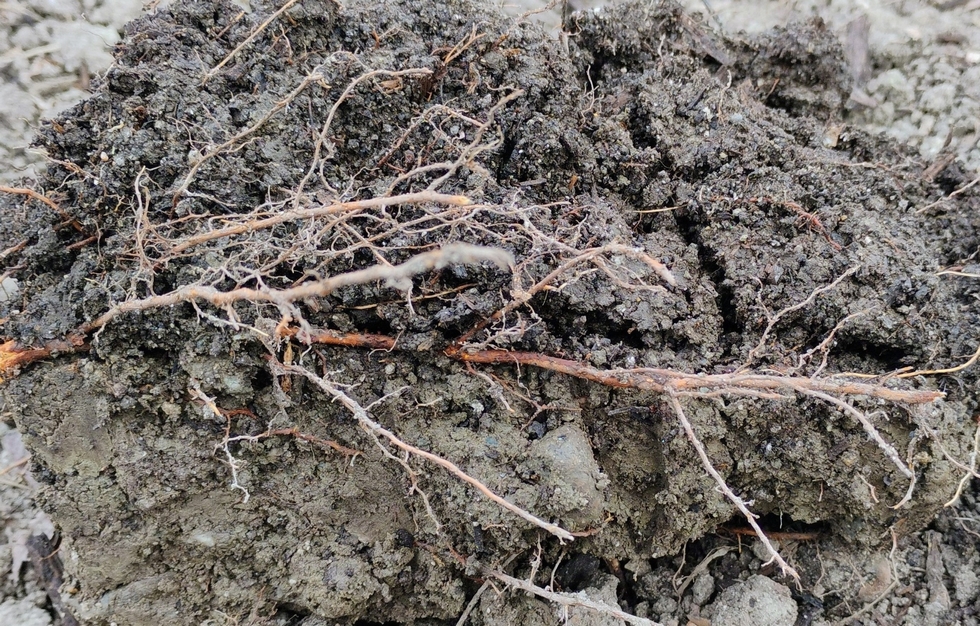
I was turning over some of my patch this past weekend and found this nice soil profile. This time last year, I had just converted a section of lawn into a pumpkin patch. The soil was originally pure clay, but was amended with peat moss, compost from the municipal landfill, and some synthetic fertilizers. In the fall, both my 490 and 962 were painstakingly cut up into pieces, hauled over to the patch, and broken up even further with the aid of a shovel. Instead of burying the pumpkin remains, I attempted to rototill them in to incorporate them into the wet soil. This went down about as poorly as one might have imagined. Rather than bury the plant matter by hand, I did the next bet thing to hide the ghastly sight of pumpkin carcasses decaying in the yard:I buried them under a layer of leaves! To my surprise and delight, all 1500 lbs of pumpkin have since decomposed, and I have a darker, less clayey layer of topsoil to work with this season.
The picture seen here illustrates the tan-coloured, native clays I started with and which surround and underlie the patch, and above the tan clay is a darker, more crumbly clay layer. Of particular interest is the tree root in the photo. Note that it runs horizontally along the interface of the two soil layers, with smaller roots/rootlets extending upwards into the patch, and scarcely any penetrating the undisturbed clay layer below. I imagine my pumpkins behaved much in the same manner last year. Their roots likely went down about 12-18 inches and hit the native clay, then spread horizontally.
The key takeaway from this entry is that the importance of soil texture and porosity cannot be understated, and the deeper one breaks up the native soils, the better. That is especially true for clay soils, otherwise a pumpkin patch is simply a clay basin from which excess water cannot drain.
|
|
|